Akola Group 2026 Q2 financial review
Farming weighed on year-end results
Akola Group ended FY2025/2026 with weaker results, contrasting with the jump seen a year ago. In the final quarter of the FY2025/2026, the company’s net profit was 40% YoY lower, while full-year net profit declined by 29% to €43.3M.
Net profit
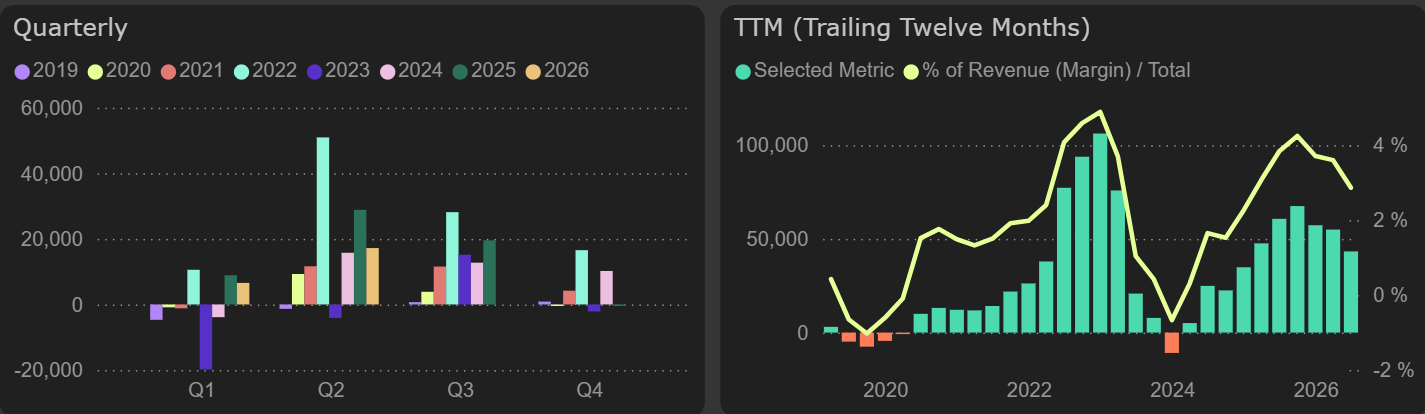
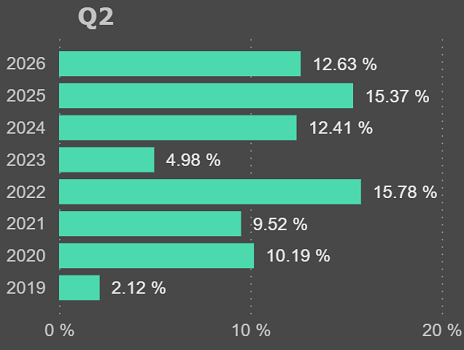
Although revenue in the final quarter decreased by around 4% YoY, the main pressure on results during the quarter came from a lower gross margin compared with the previous year.
Q2 (Q4 according to Akola’s financial year) gross margin
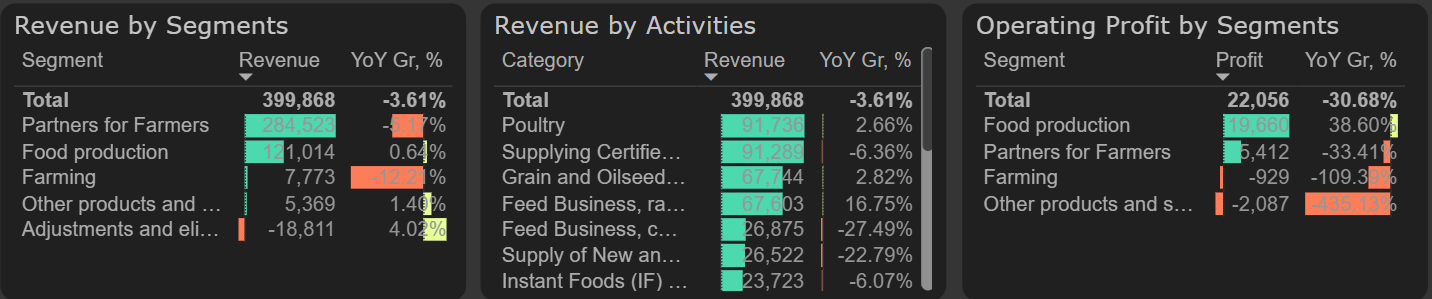
In the FY2025/2026, the largest decline in absolute terms was recorded in the Partners for Farmers segment, where operating profit fell threefold, from €28.9M to €9.4M.
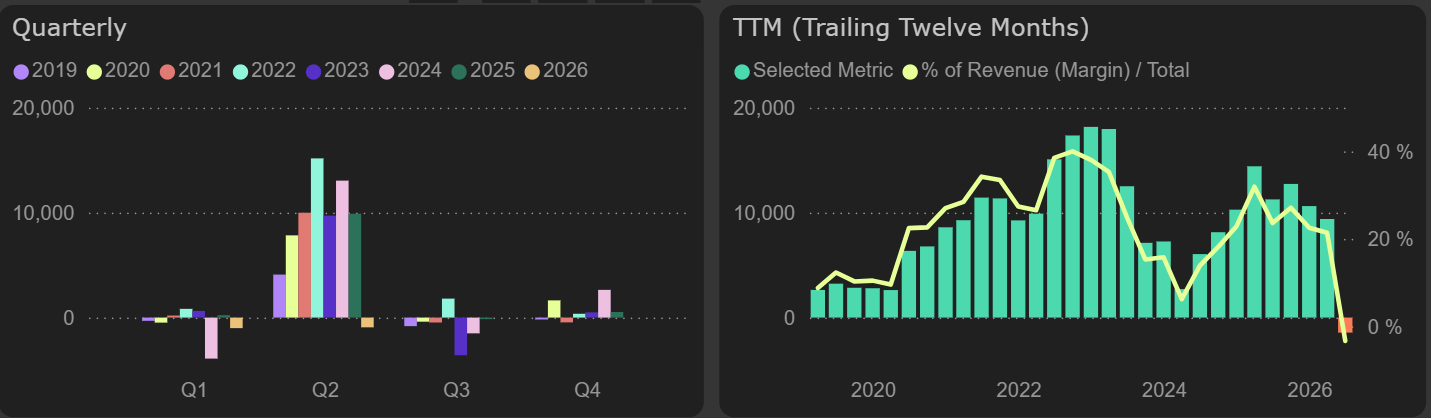
The Farming segment also had a significant negative impact on results, particularly due to a weak final quarter. While this segment typically generates the largest share of its operating profit during this quarter – in Q4 of the FY2024/2025 (2025 Q2), operating profit amounted to nearly €10M – the segment was loss-making this year. The key negative factor in the Farming segment was the milk and beef cattle operations.
Farming segment operating profit
The Food Production segment was the only segment to support both full-year and final-quarter results. In the FY2025/2026, revenue in the Food Production segment increased by 7% YoY, while operating profit grew even faster, rising by 48% YoY due to improved profitability. The Food Production segment generated the majority of the company’s operating profit in the FY2025/2026, at €58M.
Results by segments, 2026 Q2 (FY2025/2026 Q4)
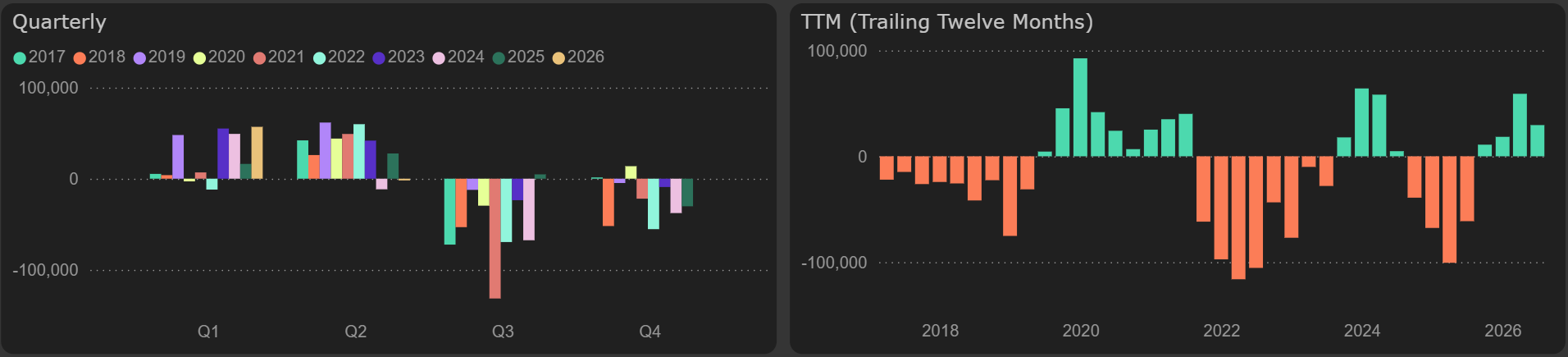
During the FY2025/2026, Akola Group generated €29.5M in free cash flow, implying a roughly 10% FCF yield. The company’s FFO amounted to €58M in the FY2025/2026, down 15% YoY. However, CAPEX was also lower during the year, allowing the company to generate positive free cash flow. Although CAPEX declined to €35M in the FY2025/2026, it was broadly in line with the level of depreciation.
Free cash flow
Valuation metrics have moved slightly higher but remain at moderate levels, with both P/E and EV/EBITDA at around 7x.


Grigeo Group | 2026 Q2 | Profit decline eases
Grigeo Group's Q2 2026 results were once again weaker than a year ago. Despite strong revenue growth, net profit declined 13% YoY in Q2. ...

